What has IPACK actually tested?
Four reports from SGS and CTI, covering our production:
| Report | Product | Scope | Result |
| SHAHL26028396401 (SGS), 8 Sep 2026 | Colourful paper cup | PPWR Art. 5(5)(c): total fluorine | Not detected (<20 mg/kg) against a 50 mg/kg limit; PASS |
| A2260639716101 (CTI), 31 Jul 2026 | Printed paper cups and paper lid | PPWR Art. 5(4) heavy metals; Art. 5(5) targeted PFAS | Pb, Cd, Hg and Cr(VI) not detected; targeted PFAS not detected |
| A2260905599102001 (CTI), 21 Oct 2026 | PET cup and PP cup, composite sample | PPWR Art. 5(5): total fluorine and targeted PFAS | Fluorine not detected (<10 mg/kg); targeted PFAS not detected; PASS |
| A226090559910101 (CTI), 28 Oct 2026 | PET cup | EU 1935/2004 and French decree 2007-766 food-contact migration | Bisphenols, overall migration, heavy-metal migration and primary aromatic amines not detected; PASS |
What do these numbers actually prove?

- On total fluorine, the paper cup returned not detected against a method detection limit of 20 mg/kg, using ASTM D7359-23 with combustion ion chromatography. That is the screening value Article 5(5)(c) sets at 50 mg/kg.
- On PFAS, the targeted scan follows EN 17681-1:2025 and returns every listed substance below its detection limit. EN 17681-1:2025 is a published European test method for PFAS analysis in textiles and textile products; we use it as a reference method for targeted PFAS screening. That is the evidence Article 5(5)(a) and (b) ask for-25 ppb for any single PFAS, 250 ppb for the sum, and total fluorine below 50 mg/kg including polymeric PFAS. The report includes a caveat worth repeating: there is no single official PFAS list, so the method and the detection limits are what make the result meaningful.
- On heavy metals, Article 5(4) caps lead, cadmium, mercury and hexavalent chromium at 100 mg/kg combined. All four were below detection in the printed paper cup, ink included.
The migration report sits under a different regime-food-contact safety rather than packaging composition-but importers now ask for both in one folder, so we file them together.
Why does the 50 mg/kg total-fluorine figure confuse buyers?


What should a buyer check before accepting a PPWR file?
- Report number, laboratory and test date, and whether the sample was a single SKU or a composite.
- The Article cited for each test, not just "PPWR compliant".
- Detection limits, so that "not detected" means something.
- Whether the product tested is the product you are buying, in the same material and print.
IPACK answers those four points for paper cups, PET cups and PP cups. Buyers who need the file before a tender can request it with the sample set
FAQ
Q: Is "PFAS-free" the same as passing PPWR?
A: No. Article 5(5) sets three numeric limits. A report with a stated method and detection limits is the evidence; the phrase alone is not.
Q: Does the paper cup test cover the print?
A: Yes. The SGS sample was a colourful printed cup, and the CTI heavy-metal and PFAS tests covered the printed cup and paper lid as submitted, ink included.
Q: When does the rest of PPWR bite?
A: Design-for-recycling criteria are due by 1 January 2028, the harmonised label from 12 August 2028 (or 24 months after the relevant implementing acts enter into force, whichever is later), and recyclability grades plus Annex V restrictions from 1 January 2030. PFAS, heavy metals and total fluorine are already enforceable.
About IPACK
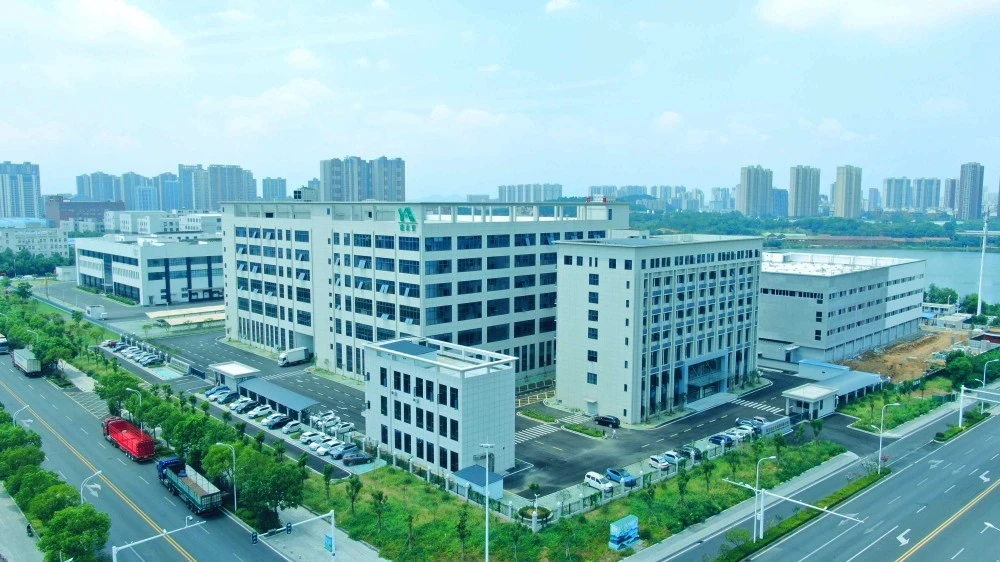
IPACK is a brand of Wuhan Xinyongan Industry and Trade Co., Ltd., manufacturing paper cups, paper bowls, PET and PP cups, beverage packaging, cup holders, straws and bags in Wuhan, China. We serve distributors, coffee chains and foodservice brands across the Middle East, Europe and North America. The company exhibits at Gulf Print & Pack 2027, 12–14 January, Dubai World Trade Centre. Contact our team for test reports, certificates and samples
Recommended Items
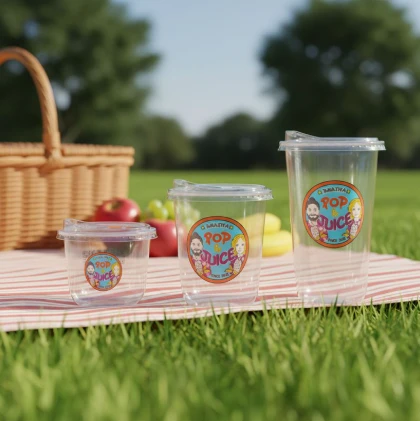
18oz Plastic Cups with Lids
- Integrated cup and lid set, easy to assemble and use.
- Lightweight design, convenient to carry around for outdoor activities.
- Uniform wall thickness, not easy to bend under normal pressure.
- No harmful additives, keeps original taste of beverages.
- Classic transparent look, suitable for various beverage stores and chain shops.